

The fashion industry in Nigeria is evolving faster than ever. More people are looking for trendy, stylish clothing at affordable prices, and this is where thrift clothing has become a massive opportunity. If you have been asking yourself how to start a thrift clothing business in Nigeria, this comprehensive guide will walk you through everything you need to know, from market research and budgeting to sourcing, branding, marketing, and scaling your business.
Thrift clothing is no longer just a niche for budget-conscious shoppers. It has become a mainstream fashion option for students, young professionals, content creators, and middle-class families. Social media influencers and celebrities have made thrifted outfits trendy and desirable, increasing demand for affordable, stylish clothing in Nigeria. Understanding this demand is the first step toward learning how to start a thrift clothing business in Nigeria successfully.
Table of Contents
Why Thrift Clothing Business Is Profitable in Nigeria
Market Analysis: Understanding Your Target Customers
Startup Costs for a Thrift Clothing Business in Nigeria
Legal Requirements and Business Registration
Where to Source Thrift Clothing in Nigeria
Budgeting for Your Initial Inventory
Physical Store vs Online Store: Which Is Better?
How to Set Up Your Thrift Clothing Store Efficiently
Pricing Strategies to Maximize Profit
Branding and Positioning Your Business
Marketing Your Thrift Clothing Business in Nigeria
Using Instagram and TikTok to Boost Sales
Customer Service and Retention Strategies
Avoiding Common Mistakes in Thrift Clothing Business
Scaling Your Thrift Clothing Business
Monthly Running Costs and Profit Potential
Step-by-Step Roadmap to Launch Your Business
Final Budget, Checklist, and Success Tips
READ: 20 Profitable Small Business Ideas with Low Startup Cost
Why Thrift Clothing Business Is Profitable in Nigeria
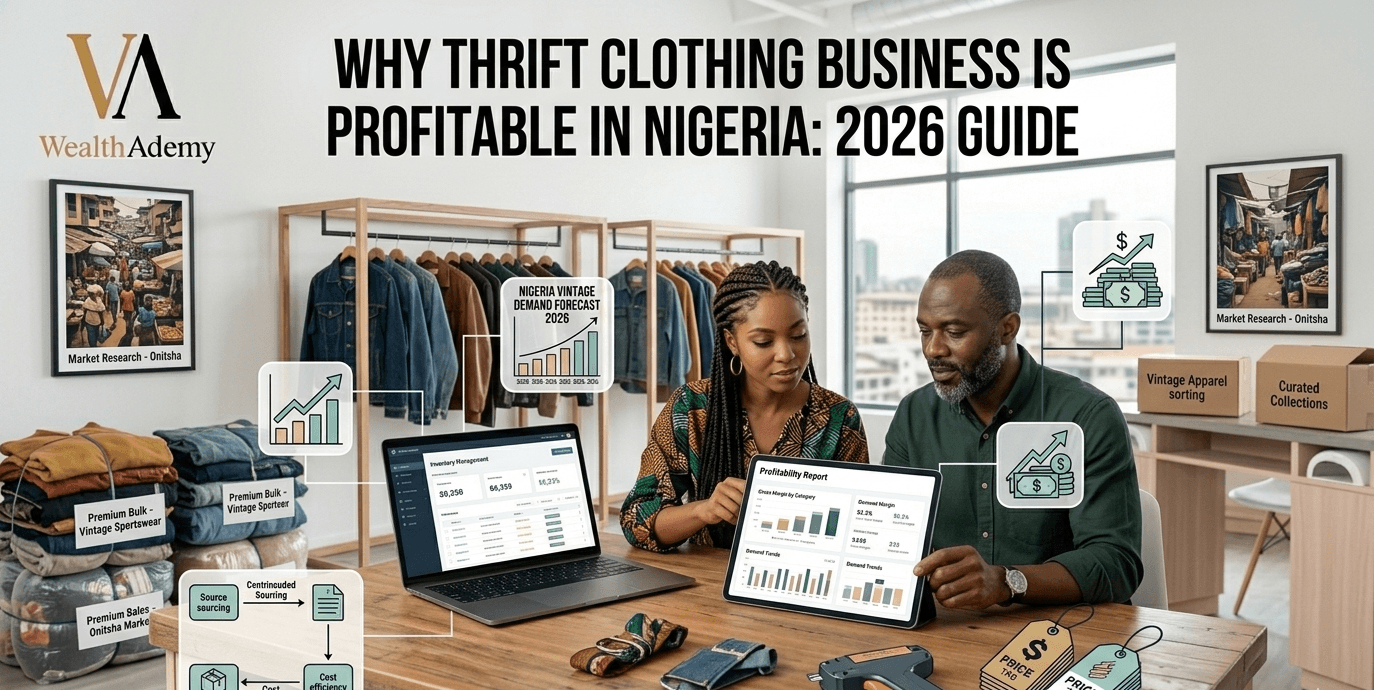
Nigeria has a population exceeding 220 million, with a significant portion consisting of young adults and students. These demographics are actively searching for affordable, stylish clothing. This makes learning how to start a thrift clothing business in Nigeria a smart and lucrative choice.
Thrift clothing has shed the stigma of being “cheap” or “low-quality.” Thanks to social media trends, second-hand clothing is now associated with unique style, individuality, and affordability. Many influencers and content creators showcase thrifted outfits, boosting demand.
By understanding this shift in consumer behavior, you can position your business effectively. The demand for affordable fashion in Nigeria is massive, and this is why learning how to start a thrift clothing business in Nigeria is a profitable venture for aspiring entrepreneurs.
Market Analysis: Understanding Your Target Customers
Before starting your thrift clothing business, you need to analyze the market thoroughly. This includes identifying your target audience, studying competitors, and understanding trends.
Your primary customers include:
- Students and young adults who want trendy clothing at low prices.
- Working professionals seeking affordable casual and formal attire.
- Influencers and content creators looking for unique pieces.
- Middle-class families looking to maximize value for money.
Competitor analysis is crucial. Look at what other thrift clothing businesses are selling, their pricing strategies, and customer engagement methods. Understanding competitors helps you create a unique selling proposition, which is essential when learning how to start a thrift clothing business in Nigeria.
Trend analysis is equally important. Oversized jackets, branded sneakers, vintage denim, and retro designs are currently popular. Sourcing the right inventory to match these trends is critical for business success.
Startup Costs for a Thrift Clothing Business in Nigeria
The cost of starting a thrift clothing business in Nigeria varies depending on your scale, location, and business model. Understanding these costs will help you plan your budget effectively.
Small Home-Based Business
A small home-based business is ideal for beginners. Startup costs typically range from ₦200,000 to ₦500,000, covering initial inventory, packaging, and social media marketing.
Medium-Scale Market Stall or Small Shop
If you want a physical presence, consider a market stall or a small shop. Costs include rent, store setup, and initial stock. Budget between ₦800,000 and ₦1,500,000.
Large-Scale Store
For a professional store with staff, branding, and extensive inventory, expect a budget of ₦2,000,000 to ₦4,000,000. This investment allows you to cater to a larger audience and achieve faster growth.
Careful budgeting is essential to ensure your thrift clothing business in Nigeria becomes profitable from the outset.
Legal Requirements and Business Registration
Registering your business is critical for credibility and compliance.
- Register your business name with the Corporate Affairs Commission (CAC).
- Pay registration fees between ₦20,000 and ₦40,000.
- Obtain permits if you plan to open a physical store.
Legal registration enhances customer trust and facilitates smoother operations. This step is a must when learning how to start a thrift clothing business in Nigeria.
READ ALSO: 12 Best Profitable Online Business Ideas for 2026 You Must Try
Where to Source Thrift Clothing in Nigeria
Sourcing high-quality clothing is key to success. Reliable sources ensure your customers get value and return for more.
Options for sourcing:
- Imported Bales: Purchase second-hand clothing in bulk from the US, UK, or Germany.
- Local Wholesalers and Markets: Lagos and Ibadan markets are great for quality bales.
- Selective Individual Purchases: Handpick premium items for resale at higher prices.
The choice of sourcing affects both startup costs and product quality. This step is critical when learning how to start a thrift clothing business in Nigeria.
Budgeting for Your Initial Inventory
Proper inventory budgeting ensures you can serve enough customers without overspending.
- Bales of clothes: ₦50,000 – ₦250,000 per bale
- Individual items: ₦5,000 – ₦50,000 each
- Accessories and shoes: ₦30,000 – ₦100,000
A balanced inventory mix helps you maximize profit and maintain customer satisfaction. Effective budgeting is a key aspect of learning how to start a thrift clothing business in Nigeria.
Physical Store vs Online Store: Which Is Better?
Physical Store Advantages
- Customers can see and try clothes.
- Builds trust and credibility.
- Easier to upsell and cross-sell products.
Physical Store Disadvantages
- Higher rent and overhead costs.
- Limited reach to local customers only.
Online Store Advantages
- Lower startup costs.
- Access to a wider audience nationwide.
- Flexible working hours.
Online Store Disadvantages
- Requires strong photography and marketing skills.
- Returns and customer complaints can be challenging.
Your choice affects your cost structure and operational plan when learning how to start a thrift clothing business in Nigeria.
CHECK OUT: 7 Powerful Ways to Use AI to Build an Online Business Step-by-Step
How to Set Up Your Thrift Clothing Store Efficiently
A well-organized store improves sales and customer satisfaction.
- Group clothing by type, size, and style.
- Highlight trendy items prominently.
- Ensure neat packaging for deliveries.
- Maintain a consistent aesthetic across social media platforms.
A professional setup enhances your business image and accelerates growth.
Pricing Strategies to Maximize Profit
Pricing is one of the most important factors in thrift business success.
- Small items: 2–3x purchase price
- Medium items: 1.5–2x purchase price
- Luxury items: 2–5x purchase price
Pricing correctly ensures profit while attracting customers. This is a critical consideration when learning how to start a thrift clothing business in Nigeria.
Branding and Positioning Your Business
Branding creates recognition and loyalty.
- Choose a memorable name that reflects thrift fashion.
- Use consistent colors and visual style across all platforms.
- Highlight your USP: affordable fashion, unique pieces, quality items.
Strong branding justifies pricing and builds customer trust.
Marketing Your Thrift Clothing Business in Nigeria
Marketing drives visibility and sales. Use a combination of online and offline marketing strategies.
- Post daily on Instagram and TikTok.
- Highlight trending items and unique finds.
- Use hashtags like #ThriftNigeria and #AffordableFashion.
- Offer small giveaways and promotions.
Effective marketing helps you recover startup costs quickly and grow your business.
Using Instagram and TikTok to Boost Sales
Social media is crucial for thrift business success.
- Share before-and-after styling photos.
- Post videos of clothing hauls and transformations.
- Engage actively with followers in comments and DMs.
- Showcase satisfied customers to build credibility.
An active social media presence attracts a larger audience and helps you scale faster.
Customer Service and Retention Strategies
Returning customers are your most valuable asset.
- Respond quickly to inquiries.
- Offer discounts for repeat buyers.
- Provide personalized recommendations.
- Ensure neat packaging and timely deliveries.
Customer satisfaction is key when learning how to start a thrift clothing business in Nigeria.
READ: HOW TO AUTOMATE YOUR BUSINESS USING AI TOOLS – 7 POWERFUL SYSTEMS
Avoiding Common Mistakes in Thrift Clothing Business
- Overpricing without offering value.
- Buying inventory without understanding trends.
- Ignoring quality control.
- Neglecting social media marketing.
Avoiding these mistakes increases the chances of success and reduces losses.
Scaling Your Thrift Clothing Business
Once you recover initial costs, you can scale your business by:
- Expanding product lines (shoes, accessories, bags).
- Hiring staff for packing, customer service, or delivery.
- Collaborating with influencers.
- Opening additional online or physical stores.
Scaling increases revenue, reduces dependency on one income source, and solidifies your brand.
Monthly Running Costs and Profit Potential
Typical expenses:
- Rent (if physical store)
- Internet/data for online business
- Restocking inventory
- Marketing campaigns
- Staff salaries (if any)
Profit potential: ₦100,000–₦500,000 for small-scale, ₦1M+ for medium to large-scale operations.
Understanding your monthly costs is critical when learning how to start a thrift clothing business in Nigeria.
Step-by-Step Roadmap to Launch Your Business
- Conduct market research
- Register your business legally
- Source inventory carefully
- Decide on an online or physical store
- Brand your business professionally
- Price items competitively
- Launch marketing campaigns
- Engage with customers regularly
- Reinvest profits into inventory
- Expand product lines strategically
- Avoid common pitfalls
- Scale gradually for long-term growth
Following this roadmap ensures a smoother launch and higher profitability.
READ ALSO: Best Small Businesses to Start With No Money: 15 Powerful Wealth Paths
Advanced Strategies for Sourcing Inventory
Finding quality and trendy thrift clothing is crucial to the success of your business. While basic sourcing has been covered, you can elevate your business by:
Importing Directly from Overseas
Many top thrift business owners import bales from the US, UK, Germany, or other countries. The advantage is access to high-quality branded clothing.
Tips for Importing:
- Use verified suppliers to avoid poor-quality items.
- Track shipping fees and customs charges.
- Purchase different categories: casual, formal, branded sneakers, and jackets.
Building Relationships with Local Wholesalers
Local wholesalers in Lagos, Ibadan, and Abuja offer affordable inventory. Negotiating with them can help you secure:
- Bulk discounts
- Exclusive deals for high-demand items
- Access to rare or branded pieces
Seasonal Inventory Planning
Understanding trends for each season helps reduce slow-moving stock:
- Rainy season: coats, jackets, rain boots
- Dry season: lightweight clothing, summer outfits
- Festive season: party dresses, accessories
Using these strategies ensures your inventory matches demand, a key consideration for how to start a thrift clothing business in Nigeria successfully.
Detailed Budgeting and Financial Planning
A detailed financial plan reduces risks and increases profit.
Fixed Startup Costs
- Business registration: ₦20,000–₦40,000
- Rent (for small shop): ₦200,000–₦600,000
- Store setup: ₦100,000–₦300,000
- Initial inventory: ₦150,000–₦500,000
Variable Monthly Costs
- Restocking: ₦50,000–₦300,000
- Marketing: ₦10,000–₦100,000
- Utilities and internet: ₦5,000–₦20,000
Profit Margin Calculations
- Aim for at least 50–100% markup on most items.
- Track slow-moving inventory to adjust future purchases
Proper budgeting is vital when learning how to start a thrift clothing business in Nigeria, especially for profitability.
CHECK OUT: How to Start a Business Without Money Today (7 Ways)
Social Media Marketing Deep Dive
Social media is your most powerful sales tool.
Instagram Marketing
- Use Reels to showcase outfits and styling tips.
- Collaborate with fashion influencers.
- Post 3–5 times daily during peak hours (7–9 AM, 4–7 PM).
TikTok Marketing
- Create trending outfit transformation videos.
- Use trending hashtags like #ThriftNigeria, #AffordableFashion, #SecondHandStyle.
- Engage with users in comments to build loyalty.
Facebook and WhatsApp
- Share products in local buy/sell groups.
- Use WhatsApp for direct communication and orders.
Social media mastery is essential for anyone asking how to start a thrift clothing business in Nigeria today.
Pricing Optimization and Customer Psychology

Pricing impacts sales volume and perceived value.
Value-Based Pricing
- Price is based on what customers are willing to pay.
- Branded thrift items can fetch higher prices.
Bundle Deals
- Offer “buy 2 get 1 free” or outfit bundles to increase average order value.
Seasonal Discounts
- Offer festive discounts or back-to-school promotions.
- Attracts more customers and clears slow-moving stock.
Pricing effectively is critical when scaling a thrift clothing business in Nigeria.
Customer Retention and Loyalty Programs
Retaining customers is more cost-effective than acquiring new ones.
Loyalty Programs
- Offer points or discounts to repeat customers.
- Reward customers for referrals.
Personalized Marketing
- Track purchase history and recommend items.
- Send birthday discounts or special promotions.
Customer retention ensures long-term growth and is vital when learning how to start a thrift clothing business in Nigeria.
Expanding Product Lines and Diversification
Once your business stabilizes, consider expanding to:
- Shoes, bags, hats, and accessories
- Kids’ clothing
- Designer thrift clothing
Diversifying products increases revenue streams and attracts a wider audience, which is an advanced strategy for how to start a thrift clothing business in Nigeria.
READ: 7 Best AI Tools to Transform Your Business | Achieve More
Advanced Scaling Strategies
Scaling your business requires smart planning:
Hiring Staff
- Delivery personnel
- Customer service reps
- Social media managers
Opening Additional Stores
- Consider high-traffic locations like malls or student areas.
- Start with a small shop before expanding
Collaborations and Partnerships
- Work with influencers to increase reach.
- Partner with online marketplaces for wider visibility
Scaling effectively is the final step when mastering how to start a thrift clothing business in Nigeria.
Detailed Case Studies and Examples
Include real-life examples of successful Nigerian thrift clothing businesses:
- Story of an Instagram-based thrift seller who scaled to ₦1M+ monthly revenue
- Example of a Lagos market stall that became a multi-location business
- Tips from business owners on sourcing, pricing, and social media engagement
Step-by-Step 12-Month Launch and Growth Plan
- Month 1–2: Market research, registration, sourcing initial inventory
- Month 3: Soft launch online or offline, begin marketing
- Month 4–5: Collect feedback, adjust pricing, and stock
- Month 6–7: Expand inventory and social media presence
- Month 8–9: Introduce accessories and bundle deals
- Month 10–11: Launch loyalty programs and seasonal discounts
- Month 12: Scale by hiring staff or opening additional outlets
This roadmap gives a detailed plan for how to start a thrift clothing business in Nigeria and grow it sustainably.
Final Budget, Checklist, and Success Tips
Budgeting:
- Home-based/online store: ₦200,000–₦500,000
- Small market stall/shop: ₦800,000–₦1,500,000
- Large-scale physical store: ₦2,000,000–₦4,000,000
Checklist for Success:
- Business registration complete
- Inventory sourced
- Store setup complete
- Pricing strategy finalized
- Marketing plan ready
- Social media profiles are active.
- Customer service protocols in place
With careful planning, consistent effort, and smart marketing, your thrift clothing business in Nigeria can become profitable and sustainable. This guide provides a clear roadmap for anyone asking how to start a thrift clothing business in Nigeria in 2026.
OTHER ARTICLES THAT MIGHT INTEREST YOU:
How to Use AI Tools to Grow Your Small Business Fast | 12 Proven Ways
10 Smart Steps for the Cost of Starting a Nail Salon in Nigeria
How to Sell AI-Generated Digital Products on Etsy & Shopify In 2026